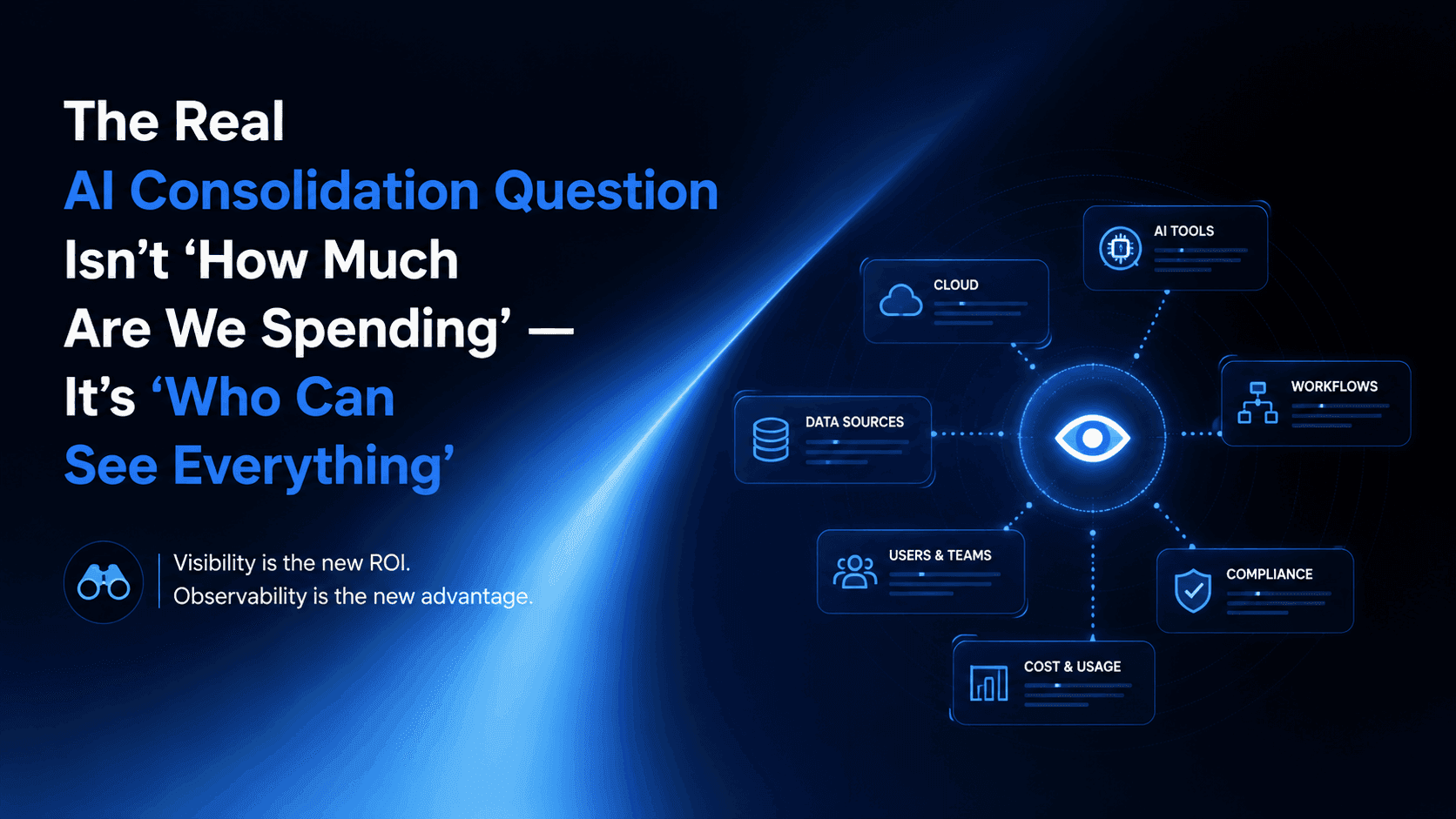
The Real AI Consolidation Question Isn’t ‘How Much Are We Spending’ — It’s ‘Who Can See Everything’
Service-as-Software contracts are replacing legacy SaaS paper as enterprises shift from renting software to buying results. Legal teams now negotiate outcome-based SLAs, AI liability caps, and expanded indemnification instead of simple uptime guarantees. This shift creates real exposure for buyers who still rely on 2022-era templates. Understanding which clauses matter — and why — determines…
Service-as-Software contracts are replacing legacy SaaS paper as enterprises shift from renting software to buying results.
Legal teams now negotiate outcome-based SLAs, AI liability caps, and expanded indemnification instead of simple uptime guarantees.
This shift creates real exposure for buyers who still rely on 2022-era templates.
Understanding which clauses matter — and why — determines whether an enterprise controls its AI vendor risk or absorbs it by default. Here’s a practical map of what 2026 contracts actually require.
Enterprise Legal Teams Confront a New Contract Category
Procurement teams spent a decade perfecting SaaS contract review. Uptime clauses, per-seat pricing, data processing addendums — all followed a predictable pattern.
That pattern no longer holds.
Agentic AI systems act on behalf of the buyer, not merely alongside them, and that changes what the contract must cover.
Legal advisors now describe this shift explicitly: as agentic AI products move beyond passive tools into autonomous execution, providers and buyers are incorporating BPO-style clauses covering service definitions, outcome-based SLAs, and broader indemnification into what used to be simple software licenses.
Service-as-Software legal risk now sits at the center of enterprise contract review, because a system that acts carries different liability than a system that merely suggests.
Service-as-Software Contracts Break the Old SaaS Template
A traditional SaaS agreement bundles a master subscription agreement, an order form, and a data processing addendum. That structure assumes the vendor delivers access, and the customer decides how to use it.
Service-as-Software inverts that assumption. The vendor delivers a completed task.
This distinction matters at the drafting table. Buy-side counsel protecting the customer and sell-side counsel protecting the vendor both negotiate the same core clauses — but the stakes shift once the AI agent, not a human operator, executes the work.
Six clauses now carry most of the negotiation risk in any AI-inclusive agreement:
- Scope of authority
- Output ownership
- Data use
- Liability caps
- Termination
- Audit rights
Enterprise buyers evaluating agentic AI vendor contracts should expect these terms to dominate redlines through the rest of 2026.
Outcome-Based SLA Clauses Replace Uptime-Only Guarantees
Uptime percentages told buyers whether software was reachable. They said nothing about whether the software actually finished the job. That gap is closing fast.
Pricing models are shifting from per-seat toward usage- and outcome-based structures. A 2026 survey of software companies found hybrid pricing, which blends a base fee with usage or outcome components, climbing from 27 percent to 41 percent adoption in a single year, while pure seat-based pricing fell from 21 percent to 15 percent over the same period.
Vendors increasingly charge only when an agent completes a defined task or hits a specified result — resolving a support ticket, processing a set data volume.
Three shifts define this new SLA layer:
- Result definition replaces access definition. The contract specifies what “done” means, not just what “available” means
- Measurement periods must be explicit. Vague windows create disputes when the outcome target and exclusion criteria are left unstated
- Payment triggers move to milestones. Fees increasingly attach to verified outcomes rather than calendar billing cycles
“An outcome-based contract ties payment to measurable results like uptime, conversion rates, or adoption targets, sharing performance risk between both parties.”
This is the practical core of outcome-based SLA clauses: risk moves from a one-sided uptime promise to a shared accountability structure.
AI Liability Caps Under Scrutiny in 2026 Redlines
Standard SaaS disclaimers treated software as deterministic. AI output is not. That mismatch has become a legal fault line.
Regulatory change is accelerating the redline. The EU’s revised Product Liability Directive explicitly brings software and AI systems within the definition of a “product,” subjecting them to the same strict, no-fault liability regime as physical goods. EU member states must transpose the directive into national law by December 9, 2026, and it applies to products placed on the market after that date — meaning a provider can face manufacturer-style liability for defects that cause harm, including inaccurate outputs or unexpected model behavior, without any need to prove negligence.
Without AI-specific liability language, that exposure applies by default — with no contractual ceiling protecting either party.
Enterprise legal teams are responding with sharper AI liability clauses, now standard rather than optional terms. Expect negotiation to center on:
- Tiered liability caps tied to the severity of the AI-driven error
- Explicit disclaimers separating model accuracy from system availability
- Carve-outs for harms tied to training data provenance
Indemnification and Data Rights Get Rewritten for Autonomous Agents
Two clauses that used to be boilerplate now require active negotiation: indemnification and data use.
Indemnification historically covered intellectual property infringement claims tied to the vendor’s code. Agentic systems introduce a new category of harm, since an autonomous agent can take an action, not just generate a suggestion.
Buyers increasingly demand indemnification language that extends to actions the agent takes on their behalf, not only to the underlying software.
Data rights face a parallel rewrite. Vendor counsel are pushed toward explicit, opt-in language that separates “Training Data” from “Customer Data” — often with tiered pricing that rewards customers willing to contribute anonymized usage data, while preserving a strict opt-out for those who won’t.
These AI indemnification terms and data-use distinctions now sit near the top of every enterprise redline.
Governance, Audit Rights, and Termination Triggers
Governance clauses have moved from appendix material to primary negotiation points. Enterprise buyers want visibility into how an autonomous agent reaches decisions — not just confirmation that it completed a task.
| Legacy SaaS Clause | Service-as-Software Equivalent |
|---|---|
| Uptime SLA (percentage-based) | Outcome SLA tied to task completion |
| Standard IP indemnification | Extended indemnification covering agent actions |
| Flat liability cap | Tiered liability cap by error severity |
| Annual data privacy review | Continuous audit and governance rights |
| Breach-only termination | Performance-triggered termination |
| General AUP language | Explicit prohibited-use clauses for agent behavior |
Termination clauses reflect this same shift. Legacy agreements triggered termination on breach or non-payment.
Service-as-Software agreements increasingly add performance-based exit rights — letting the buyer terminate when an agent consistently misses defined outcome targets, independent of any traditional breach.
Audit rights, meanwhile, are shifting from an annual checkbox to continuous access, giving buyers standing visibility into model behavior and decision logs rather than a once-a-year snapshot.
This restructuring reflects a broader accountability gap that traditional licensing and staffing contracts were never built to close — and outcome-based outsourcing deals have grown sharply as a share of new agreements in response.
Xccelera Turns Contract Complexity Into Deployment Readiness
Enterprise legal teams cannot negotiate Service-as-Software contracts in isolation from the systems those contracts govern.
Every clause covered above — from outcome-based SLAs to AI indemnification terms — depends on the buyer understanding exactly what the underlying agentic system does, how it acts, and where its authority ends. That clarity has to come from the technology layer, not just the legal one.
An AI Agent Lifecycle Management Platform gives enterprise teams the operational visibility that modern contract governance actually requires — supporting the audit trails, decision logs, and lifecycle controls that legal and procurement teams now expect to see written into governance clauses.
As 2026 negotiations increasingly hinge on demonstrable system accountability, having that infrastructure in place before the redline starts is a genuine advantage.
Discussion: When’s the last time your legal team actually redlined an AI vendor contract against 2026 clauses — or is it still running on a template built for a system that only suggested, never acted?
If you’re preparing your legal or procurement team for the next wave of AI vendor contracts, subscribe for more briefings on outcome-based SLAs, liability frameworks, and what’s actually changing in enterprise redlines this year.