AI Agents vs AI Assistants: Core Differences and Enterprise Use Cases
Artificial intelligence in enterprises is evolving from simple productivity tools to autonomous operational systems. While AI assistants help employees perform tasks through prompts and guidance, AI agents execute workflows independently using planning, reasoning, and system integrations. Understanding this distinction is critical because many organizations expect assistants to deliver automation outcomes that only agentic systems can…
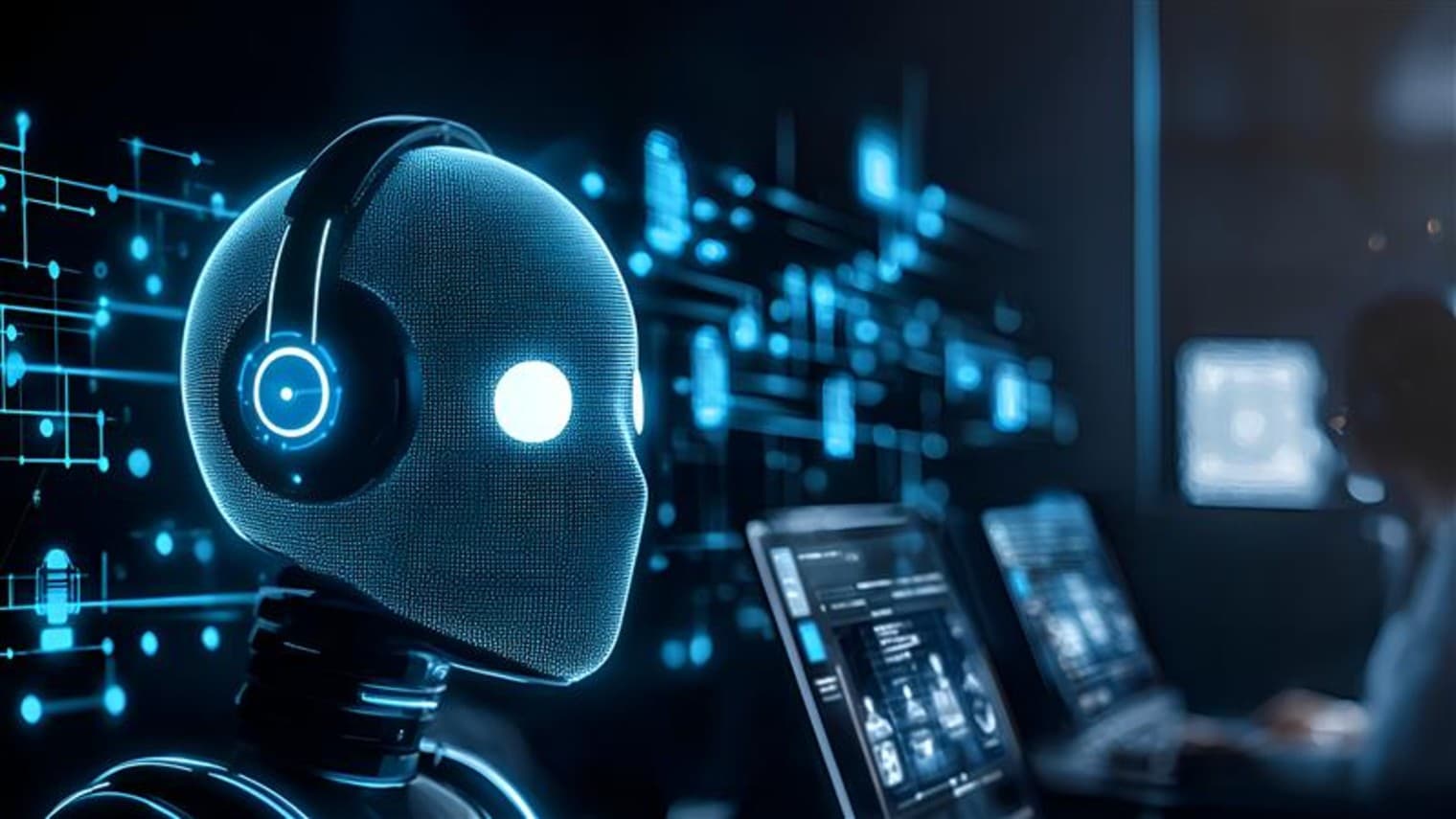
Artificial intelligence in enterprises is evolving from simple productivity tools to autonomous operational systems. While AI assistants help employees perform tasks through prompts and guidance, AI agents execute workflows independently using planning, reasoning, and system integrations. Understanding this distinction is critical because many organizations expect assistants to deliver automation outcomes that only agentic systems can achieve. This difference directly influences enterprise AI strategy, automation depth, and operational scalability.
The Rise of Enterprise AI Systems: Why the Agent vs Assistant Debate Matters
Enterprise AI adoption has accelerated dramatically as organizations deploy generative technologies to improve productivity, decision making, and operational automation. However, one major misunderstanding persists across industries: the difference between AI assistants and AI agents. While both use large language models and automation capabilities, they operate at fundamentally different levels of autonomy and responsibility.
AI assistants are designed to support human work, responding to prompts, retrieving information, or completing specific tasks when instructed. AI agents, in contrast, function as autonomous systems capable of planning, reasoning, and executing multi step workflows with minimal human intervention. This distinction matters because enterprises often expect assistant based systems to deliver the same operational outcomes as agent based architectures. When organizations misunderstand this difference, AI initiatives frequently stall at the experimentation stage rather than delivering real automation value.
According to IBM’s enterprise AI research, assistants typically focus on human productivity augmentation, while agents extend automation into end to end workflow execution across enterprise systems.
AI Assistants Explained: Reactive Intelligence Designed to Support Human Work
AI assistants represent the earliest enterprise implementation of generative AI systems designed to support human decision making and productivity. These systems operate as interactive tools that respond to instructions, generate outputs, and retrieve knowledge when requested by users. Their architecture is intentionally designed to augment human work rather than replace it, which is why assistants remain dependent on user prompts and supervision.
Prompt Driven Interaction
AI assistants function through conversational or command based interfaces where employees initiate requests. The system interprets instructions, processes enterprise knowledge sources, and generates responses such as summaries, reports, recommendations, or written content. Without user prompts, assistants typically do not initiate tasks or workflows.
Support for Individual Tasks
Assistants focus on improving the speed and efficiency of specific tasks rather than managing entire operational processes. For example, they can draft emails, summarize meetings, analyze documents, generate code suggestions, or search internal knowledge bases. These capabilities allow employees to complete routine work faster while maintaining control over final decisions.
Productivity Enhancement Across Teams
Organizations integrate assistants into productivity platforms, customer service tools, development environments, and enterprise knowledge systems. In these environments, assistants help employees reduce manual effort, access information faster, and generate outputs that normally require significant time or research.
Despite these benefits, assistants do not independently plan tasks, coordinate across multiple systems, or execute complex workflows. Their capabilities remain centered on human directed assistance, which is why enterprises increasingly explore autonomous AI agents for deeper operational automation.
AI Agents Explained: Autonomous Systems That Execute Business Outcomes
AI agents represent a more advanced category of enterprise AI systems designed to operate with greater independence than assistants. Instead of simply responding to prompts, agents are capable of interpreting goals, planning actions, and executing tasks across enterprise systems. Their purpose is to move beyond productivity support and enable operational automation at scale.
Goal Based Execution
AI agents operate around defined objectives rather than isolated prompts. When assigned a task, the system analyzes the goal, identifies required steps, and executes those actions sequentially to achieve the outcome.
System and Tool Connectivity
To complete tasks, agents interact with enterprise tools such as databases, APIs, workflow platforms, and internal applications. This connectivity allows them to gather information, perform actions, and update systems without constant human intervention.
End to End Workflow Automation
A major distinction between agents and assistants lies in workflow ownership. Agents can coordinate multiple actions within a process such as analyzing data, generating outputs, and updating systems. This capability allows organizations to automate operational activities that previously required continuous human involvement.
Continuous Evaluation
Advanced agents can monitor the results of their actions and adjust their behavior when necessary. This ability enables systems to improve task execution over time while maintaining alignment with business objectives.
Core Differences Between AI Agents and AI Assistants
While both systems rely on large language models and intelligent automation, their operational roles inside enterprises are fundamentally different. The contrast becomes clear when comparing autonomy, task ownership, system interaction, and the type of value each technology delivers to organizations.
Level of Autonomy
In assistant based systems, human instructions drive every action. Employees initiate requests, and the system generates responses or recommendations to support the task. Agents operate with a higher level of independence because they interpret objectives and execute actions needed to achieve those goals.
Scope of Work
Most assistants focus on supporting individual activities such as summarizing documents, drafting content, or retrieving internal knowledge. Agents operate across broader operational sequences where multiple actions must be coordinated to complete a business process.
Decision Authority
Human users remain the final decision makers when working with assistants, which primarily provide insights or suggestions. Agents can evaluate conditions, choose appropriate actions, and execute them within defined enterprise rules, enabling limited operational decision making.
Integration Across Systems
Productivity platforms and conversational interfaces commonly host assistants, keeping their functionality close to the user environment. Agents interact with APIs, databases, and enterprise platforms, allowing them to retrieve information and perform actions across multiple systems.
Business Outcomes
Productivity improvement represents the primary benefit of assistants, helping employees complete tasks faster and with less manual effort. Agents focus on operational automation by coordinating processes and executing workflows that would otherwise require continuous human involvement.
Enterprise Use Cases: Where AI Assistants and AI Agents Deliver Real Business Value
Enterprises rarely deploy assistants and agents for the same purpose. Each technology supports a different layer of work inside organizations. Assistants primarily enhance human productivity, while agents automate operational processes that require coordination across systems and decision steps.
Use Cases Where AI Assistants Add Value
Knowledge and document generation
Business teams use assistants to draft reports, summarize research, and generate internal documentation. This reduces the time employees spend on manual writing and information consolidation.
Meeting intelligence and communication support
Assistants can summarize meetings, extract action items, and help draft follow up emails. These capabilities allow teams to keep track of decisions and maintain documentation of discussions.
Developer productivity enhancement
Engineering teams deploy coding assistants that suggest code snippets, detect errors, and accelerate debugging. This support helps developers complete tasks faster without replacing human control over the development process.
Customer service response assistance
Support teams use assistants to retrieve knowledge base information and generate response drafts, enabling faster issue resolution while agents maintain direct communication with customers.
Use Cases Where AI Agents Deliver Automation
Autonomous IT operations
AI agents monitor infrastructure, detect anomalies, and execute remediation steps when performance issues arise. These systems help maintain service reliability without requiring constant human intervention.
Data analysis and reporting automation
Agents can gather information from multiple sources, analyze datasets, and generate reports automatically, reducing manual analytical work across departments.
Supply chain coordination
In logistics environments, agents track inventory, analyze demand signals, and coordinate operational updates across supply chain platforms.
Business workflow orchestration
Organizations deploy agents to manage complex processes such as financial reconciliation, internal approvals, or operational reporting, enabling automated coordination between multiple enterprise systems.
The Future Enterprise Stack: Hybrid Human Assistant and Autonomous Agent Systems
Enterprise AI adoption is gradually moving toward hybrid systems where assistants and agents operate together. Rather than replacing one another, these technologies serve different layers of organizational work. Assistants remain the interface through which employees interact with AI, while agents execute complex processes in the background.
Assistants as the Human Interaction Layer
Within most organizations, assistants act as the primary interface between employees and intelligent systems. Workers communicate with assistants through conversational interfaces to retrieve insights, generate documents, or initiate tasks. This interaction layer simplifies how humans engage with advanced AI capabilities.
Agents as the Operational Execution Layer
Behind the interaction layer, AI agents can execute workflows that involve multiple systems and decision steps. Once an objective is defined, agents coordinate actions such as retrieving data, performing analysis, and updating enterprise platforms. This structure enables organizations to automate processes without requiring employees to manually manage each step.
Emergence of Hybrid AI Workforces
The next phase of enterprise AI will likely involve hybrid teams where humans, assistants, and autonomous agents collaborate within the same operational environment. In such systems, assistants help employees define goals and interpret outputs, while agents handle the operational execution required to achieve those goals.
As organizations continue to adopt agent driven architectures, the distinction between assistance and automation will shape how enterprises design their AI strategies and build scalable digital operations.
Conclusion
The distinction between AI assistants and AI agents represents a critical shift in how enterprises approach automation. Assistants primarily enhance human productivity by helping employees generate content, retrieve information, and complete tasks more efficiently. AI agents, however, extend automation further by planning actions and executing workflows across systems. As organizations mature their AI strategies, many will adopt hybrid models where assistants act as the interaction layer while agents manage operational execution. Understanding this difference enables enterprises to deploy the right technology for the right objective, ensuring AI investments translate into measurable productivity gains and scalable operational efficiency.