The Evidence Agent Explained: How Xccelera Creates an Immutable Audit Trail for Every AI Action
Autonomous AI agents executing enterprise workflows create an accountability challenge: how do organizations prove what an agent did, why it did it, and whether it complied with regulations? Evidence agents solve this by capturing every decision, every data access, and every action within immutable audit trails. These systems create permanent, verifiable records of agent behavior…
Autonomous AI agents executing enterprise workflows create an accountability challenge: how do organizations prove what an agent did, why it did it, and whether it complied with regulations?
Evidence agents solve this by capturing every decision, every data access, and every action within immutable audit trails. These systems create permanent, verifiable records of agent behavior that satisfy regulatory requirements, enable forensic analysis of failures, and provide non-repudiable proof of compliance.
Xccelera’s Evidence Agent architecture consequently transforms AI deployment from black-box risk to auditable, transparent operation. It is, therefore, critical infrastructure for enterprises navigating AI governance and regulatory oversight.
Why Immutable Audit Trails Matter for Enterprise AI Agents
Autonomous agents making business decisions without human intermediation represent genuine value. They accelerate operations, reduce costs, and scale execution. They also, however, introduce accountability exposure that traditional systems never presented.
When a human analyst approves a loan denial, that decision exists within organizational memory, systems create records, and chains of responsibility are traceable. When an autonomous agent denies a loan, approves a claim, or executes a trade, the same organizational and regulatory questions arise instantly: What logic did the agent apply? What data did it access? Did it follow required procedures? Can this decision survive regulatory scrutiny?
Why Traditional Audit Logging Falls Short
Traditional audit logging proves insufficient in this context. Conventional database logs can be overwritten by administrators. System updates can eliminate historical records. Logs exist in single locations where they are vulnerable to deletion or tampering. For regulated industries including financial services, healthcare, and insurance, these vulnerabilities are unacceptable. Regulators increasingly demand complete, verifiable, tamper-proof evidence that autonomous systems behaved correctly.
Immutability becomes, therefore, the technical answer to an accountability requirement. An immutable audit trail cannot be altered retroactively without detection. Every action produces permanent evidence. Regulatory auditors can verify behavior months or years after decisions were made, confident that records have not been modified. This transforms autonomous agents from governance liabilities into deployable operational systems. It is precisely this shift that makes agentic AI solutions viable at enterprise scale rather than remaining confined to low-stakes pilot programs.
What Are Evidence Agents and How Do They Work
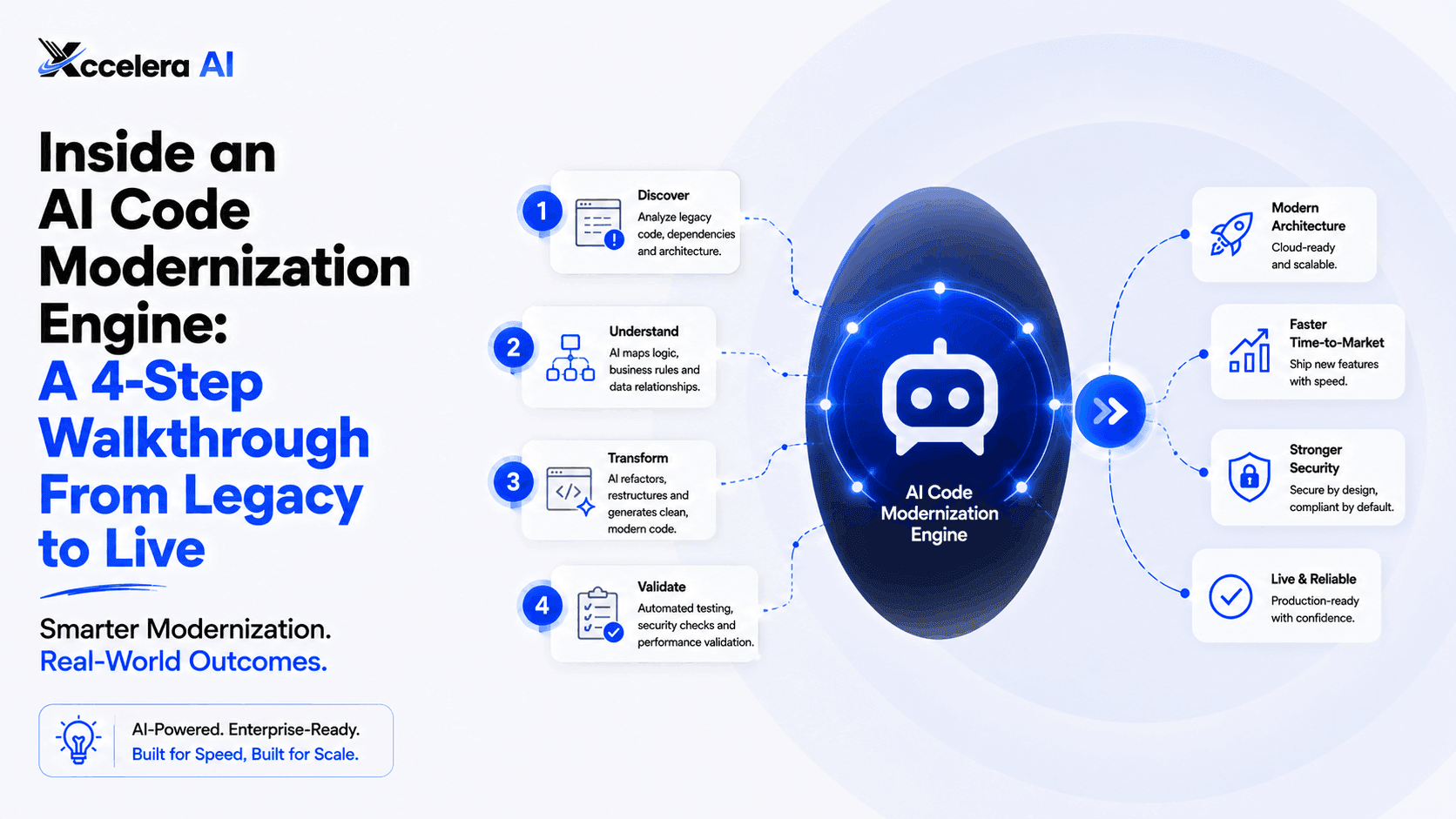
An Evidence Agent is a specialized system that operates alongside autonomous agents, continuously capturing decision context, execution steps, data lineage, and compliance verification. It does not replace the autonomous agent. Instead, it observes the autonomous agent, records everything it does, and locks those records into tamper-proof storage.
The architecture operates in real time. When an autonomous agent accesses a database, the Evidence Agent logs what data was retrieved and why. The agent applies decision logic, the Evidence Agent captures the logic branch taken and the data inputs used. When the agent executes an action such as approving a transaction, routing a case, or updating a system, the Evidence Agent records the action, timestamp, and system state both before and after. All of this happens during normal agent execution without introducing processing delays that would undermine operational performance.
Real-Time Capture Without Performance Degradation
The capture extends to compliance checks as well. If organizational policy requires that certain transactions only proceed with human review, the Evidence Agent records whether that review occurred, who performed it, and what decision they made. If regulatory frameworks mandate that certain decisions be logged with specific metadata, the Evidence Agent ensures that metadata is present and correctly formatted. This makes compliance verification systematic rather than detective work performed after the fact.
The records themselves are cryptographically secured. Each log entry is hashed, converted to a unique digital fingerprint. If any character in that entry is modified, the hash changes and the tampering becomes immediately detectable. Log entries are also timestamped by external authorities, making it impossible to claim records were created retroactively. The result is forensic-grade documentation of agent behavior. This level of rigor is increasingly expected as part of broader DevSecOps for secure development practices that govern how enterprise software systems are built and operated.
Immutable Logging: From Traditional Audit Systems to Blockchain-Backed Evidence
Traditional audit systems store logs in databases. Database administrators can modify records if they have sufficient privileges. System backups create copies that could be altered. Regulatory auditors have, consequently, no way to verify logs have not been changed since the events occurred. This architectural weakness is acceptable for non-regulated contexts. It is, however, unacceptable for financial services, healthcare, and other domains where every audit must be defensible against determined scrutiny.
How Distributed Ledger Architecture Solves the Problem
Immutable logging moves from centralized databases to distributed ledger systems or blockchain-backed architectures. Rather than storing all logs in one location, copies exist across multiple nodes. Each new log entry builds on the previous one, cryptographically linked through hashing. Altering any historical entry would break the chain, making tampering immediately obvious. This design makes it computationally impractical to modify records without detection.
Timestamping from external authorities further strengthens evidence. Instead of relying on a single organization’s clock, Evidence Agents use timestamping services operated by trusted third parties. An external authority signs each log entry with a cryptographic timestamp. If a claim arose that a log entry was fabricated or backdated, the third-party timestamp proves when the entry was actually created. According to NIST’s guidelines on digital evidence integrity, cryptographic hashing and external timestamping together represent the gold standard for maintaining forensically defensible records.
Forensic and Recovery Capabilities That Follow from Immutability
Recovery and forensic capabilities emerge directly from this architecture. If an agent malfunction caused business harm, investigators can access immutable records showing exactly what decisions the agent made, what data it accessed, and what outcomes resulted. They can follow the chain of causation from inputs through logic through action. This enables root-cause analysis and corrective action that prevents recurrence, a capability that is also central to Xccelera’s approach to securing AI agents with identity, access control, and monitoring.
Compliance and Regulatory Mandates Driving Evidence-Based AI Systems
Regulatory frameworks are rapidly tightening around autonomous systems. Financial services regulators mandate that trading systems maintain complete audit trails enabling regulators to understand every trade and verify compliance with risk limits. Healthcare authorities require that AI-assisted diagnostic systems be accompanied by decision support logs showing what clinical factors influenced recommendations. Insurance regulators increasingly examine claims processing for bias and discriminatory outcomes, requiring evidence that approved and denied claims followed consistent policy application.
The Regulatory Landscape Across Industries
HIPAA in healthcare explicitly requires that access to patient data be logged and auditable. GDPR in Europe requires a right to explanation, meaning individuals must be able to understand decisions affecting them. SOC 2 compliance for service providers mandates complete audit trails and access controls. PCI-DSS for payment systems requires logging every transaction and verification step. SEC regulations for algorithmic trading require that algorithmic trading systems be monitored and logged continuously.
These are not theoretical requirements. Regulators actively examine logs during audits. They search for patterns indicating bias or non-compliance. They verify that required human reviews actually occurred. Organizations discovered deleting logs or unable to produce complete evidence face severe penalties. A bank that cannot produce trading logs faces trading privilege suspension. A healthcare provider that cannot verify appropriate access controls faces license action. Insurance companies face substantial fines for claims processing that lacks audit evidence.
Evidence agents directly address this regulatory reality. By capturing complete, immutable records of autonomous agent behavior, organizations can demonstrate compliance methodically. When a regulator arrives, complete documentation exists. When a lawsuit challenges a decision, forensic logs prove the decision followed required procedures. This transforms regulatory risk from existential threat to managed compliance expense. Organizations operating in fintech and healthcare environments are, therefore, among the earliest and most consistent adopters of evidence-based agent architectures.
Enterprise Use Cases: Where Evidence Trails Enable Agent Deployment
Financial services firms deploying algorithmic trading agents face regulatory requirements that previously blocked autonomous execution. With Evidence Agents capturing every trade, decision logic, and risk parameter check, regulators approve deployment. The firm gains speed and efficiency while maintaining regulatory confidence.
Healthcare and Insurance Applications
Healthcare organizations deploying AI diagnostic support encounter physician resistance around explainability: How do teams explain AI recommendations to patients? How do they ensure AI is not introducing bias into treatment decisions? Evidence Agents solve this through complete decision documentation. When an AI system recommends a diagnostic path, logs show what imaging was analyzed, what clinical factors were weighted, and what alternative diagnoses were considered. Physicians use this documentation to explain recommendations to patients. Regulators use it to audit for bias.
Insurance claims processors face similar pressures. Claims denial decisions face increasing legal challenges. Applicants demand explanation for why claims were denied. Insurance regulators examine denial patterns for discrimination. Evidence Agents create complete justification trails. When a claim is denied, documentation shows exactly what policy criteria applied, what data was evaluated, and why the claim failed to meet requirements. This protects against frivolous litigation while ensuring legitimate denials can be defended.
Legal Discovery, Procurement, and Supply Chain
Legal discovery and litigation support represent another emerging use case. In litigation, parties exchange documents including all emails, messages, and decisions. If autonomous agents made decisions affecting case facts, those decision logs become discoverable evidence. Evidence Agents ensure complete, uncontestable records exist for this purpose.
Supply chain and procurement automation similarly benefit from evidence trails. When procurement agents negotiate contracts, execute purchases, or approve vendors, immutable records prove compliance with procurement policies and conflict-of-interest rules. According to Gartner’s research on AI governance in enterprise procurement, organizations with auditable AI decision trails resolve procurement disputes 60 percent faster than those relying on reconstructed records. This use case connects naturally to Xccelera’s multi-agent systems capabilities, where coordinated autonomous agents require end-to-end traceability across every inter-agent interaction.
How Xccelera’s Evidence Agent Architecture Powers Auditable AI
Xccelera’s Evidence Agent layer operates as native infrastructure within autonomous agent systems. Rather than bolting audit capability onto existing agents, Evidence Agents integrate at the architecture level, capturing behavior from first execution.
The system operates transparently to the autonomous agent itself. The agent focuses on reasoning and execution. The Evidence Agent layer observes, records, and secures evidence. This separation means organizations gain auditability without reengineering autonomous agents.
Asynchronous Logging, API Integration, and Compliance Automation
Real-time capture happens without performance degradation. Modern Evidence Agents use asynchronous logging: records are written to immutable storage without blocking agent execution. An autonomous agent executing a customer service request completes the interaction while Evidence logs are committed to distributed ledger in parallel. The customer experiences no delays.
Integration with existing systems occurs through standard API interfaces. Organizations with agents already deployed can layer Evidence Agents on top without architectural reconstruction. New agents built with Evidence Agents from inception gain auditability automatically. This is consistent with how Xccelera approaches AI agent integration more broadly: layering governance into existing workflows rather than forcing full replacement.
Compliance verification automation is particularly powerful in this context. Evidence Agents can continuously check captured records against policy rules. If an agent action violates a requirement, automated systems flag the violation immediately rather than waiting for a post-hoc audit. This enables corrective action in real time.
Forensic Analysis Tools for Rapid Investigation
Forensic analysis tools provided by Xccelera enable rapid investigation when questions arise. Investigators can query immutable logs by agent, by action type, by time range, and by compliance status. They can trace decision chains showing how an agent arrived at conclusions. They can identify patterns indicating systematic problems requiring correction. According to IBM’s Cost of a Data Breach Report 2025, organizations with automated forensic investigation capabilities reduce the average breach investigation timeline by 74 days compared to those conducting manual log reviews. Visit xccelera.ai for detailed documentation on Evidence Agent capabilities and deployment frameworks.
The Future of AI Governance: From Black Box to Transparent Evidence Systems
The trajectory of AI governance points clearly toward transparency and auditability as baseline requirements, not luxury features. As AI systems expand into higher-stakes decisions, stakeholder expectations for understandability intensify. Investors demand proof that AI governance exists. Regulators require evidence that autonomous systems operate within authorized boundaries. Employees and customers expect to understand how AI affects them.
Why Early Adoption Becomes a Competitive Moat
Organizations embedding Evidence Agents early gain competitive advantage as a result. They deploy autonomous agents faster because regulatory approval becomes straightforward. Faces lower compliance friction because complete documentation exists. They build stakeholder trust through transparent, auditable operations.
The long-term trajectory suggests immutable evidence systems will become standard infrastructure for any autonomous system making consequential decisions. Just as traditional IT infrastructure includes backup systems, encryption, and access controls, future autonomous agent infrastructure will include Evidence Agents as fundamental components. Organizations that treat auditability as foundational rather than supplemental will be positioned to lead responsible AI adoption. This is, ultimately, what separates organizations that scale AI automation sustainably from those that face regulatory and operational setbacks mid-deployment.