XOra Onboarding Automation: How One AI Call at Signup Increases Completion Rates by 41%
SaaS onboarding failure is a $1M+ annual revenue leak for most growing companies. Up to 75% of users abandon within the first week when initial friction goes unresolved. One AI voice call at the point of signup changes that equation. XOra’s conversational voice agent activates new users in real time, walks them through setup, resolves…

SaaS onboarding failure is a $1M+ annual revenue leak for most growing companies. Up to 75% of users abandon within the first week when initial friction goes unresolved. One AI voice call at the point of signup changes that equation. XOra’s conversational voice agent activates new users in real time, walks them through setup, resolves hesitation before it becomes abandonment, and auto-syncs every interaction to the CRM without human involvement. The result is a 41% lift in onboarding completion and a compounding retention advantage from day one.
The Onboarding Drop-Off Problem No Email Sequence Can Fix
Signup is not activation. That distinction costs SaaS companies millions every year. Across the industry, 40 to 60% of new users never return after their first session, not because the product fails to deliver, but because onboarding makes them work before they experience any value. According to User Guiding research cited in a 2026 industry analysis, 90% of users churn if they do not understand a product’s core value within the first week of signing up.
The Window Is Shorter Than Most Teams Think
The activation window closes fast. Users who do not meaningfully engage within the first 72 hours are statistically unlikely to convert. Research from the Stanford Behavior Design Lab confirms that users who fail to activate in the first three days are 90% more likely to churn entirely. That gap between signup and first meaningful interaction is where most onboarding investments go to waste.
Why Email Cannot Close the Gap
Email sequences are asynchronous by design. They respond to a problem that has already occurred rather than intercepting the moment of hesitation as it forms. When a user stalls on a verification screen or pauses before entering payment information, an email that arrives four hours later is not a recovery tool. It is confirmation that the product already lost them.
The Rocketlane 2025 benchmark report found that 83% of B2B buyers call slow onboarding a dealbreaker. Only 19.2% of users complete onboarding checklists on average. Passive communication channels operating on scheduled cadences cannot address friction that is behavioral and immediate.
Why Voice Is the Highest-Converting Onboarding Channel
When users hesitate during onboarding, the intervention that converts them is not a nudge or a tooltip. It is a conversation. Voice addresses hesitation in real time because it operates at the speed of human cognition rather than at the speed of a scheduled workflow.
The Completion Rate Differential
The performance gap between voice and text-based onboarding is substantial and well-documented. Conversational voice AI achieves 90% completion rates in financially sensitive onboarding flows compared to 55% for text-based methods, a 35% gap driven by real-time assurance and guided progression.
Switching to conversational onboarding flows overall lifts completion from an average of 42% to 71%, particularly in mobile-first environments where typing creates compounding friction. Speaking is three to four times faster than typing, which reduces cognitive load precisely at the steps where abandonment risk is highest.
Trust as a Conversion Variable
Trust is not a soft metric in onboarding. In any flow requiring identity verification, payment entry, or sensitive data submission, a calm and authoritative voice conveys security that a static form field cannot replicate.
Users processing complex compliance requirements, financial disclosures, or account configurations respond to conversational guidance differently than they respond to written instructions. The emotional assurance embedded in a natural voice interaction closes the gap between intent and completion where text consistently fails.
How the XOra Pipeline Fires at Signup
XOra operates as a fully autonomous voice agent that activates the moment a new user completes signup. There is no delay, no scheduling queue, and no manual trigger required. The entire pipeline executes in sub-second latency from the point of activation to the first spoken response.
The Technical Execution Layer
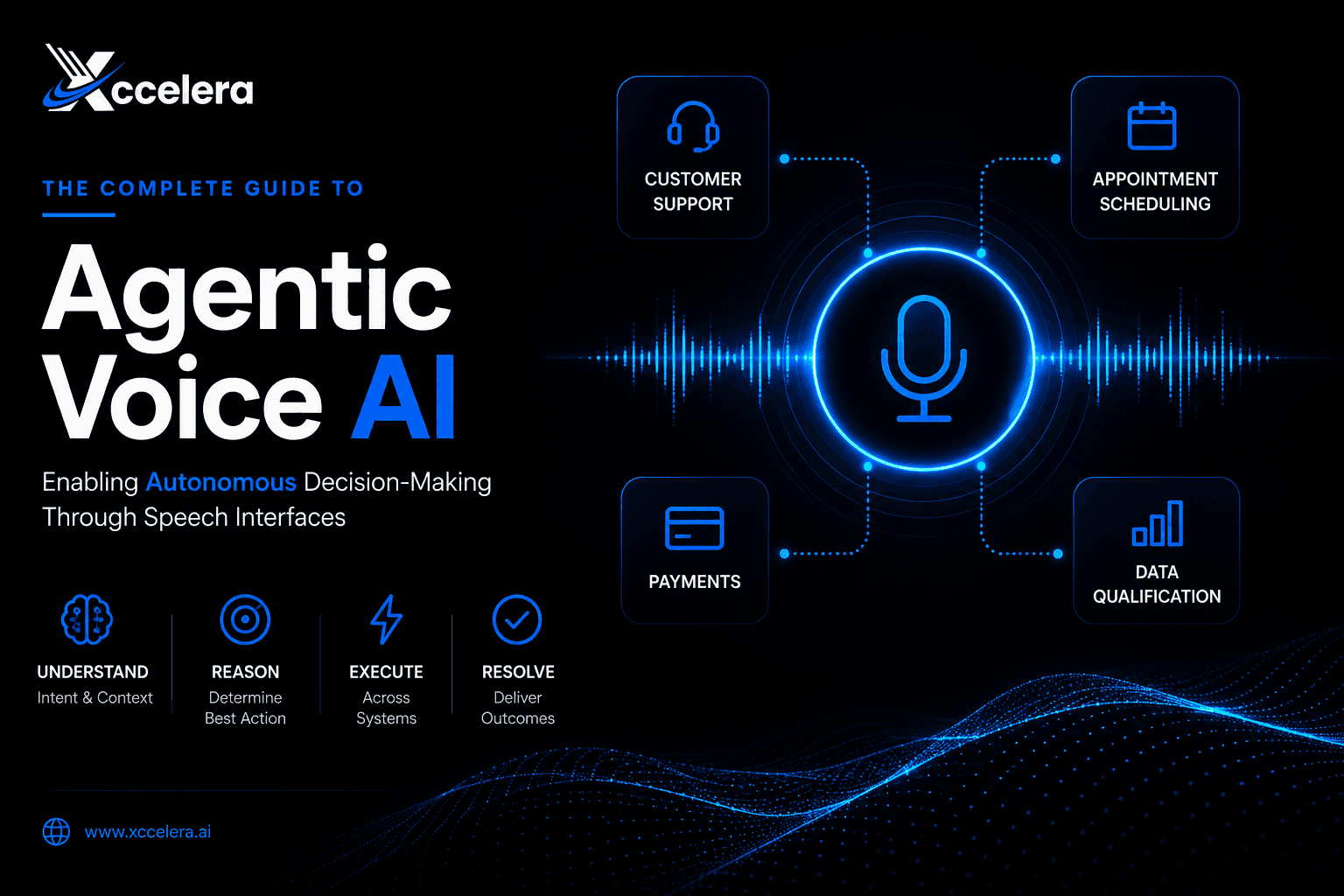
The XOra pipeline processes each onboarding interaction through four sequential stages: Whisper-class automatic speech recognition converts user input to structured text, a large language model extracts intent and routes to the appropriate business logic layer, real APIs and database calls execute the required action, and Neural TTS generates a natural spoken response.
Noise cancellation operates throughout, and memory-driven context retention ensures the agent carries forward everything shared earlier in the call without forcing users to repeat themselves.
Zero Human Dependency in Standard Flows
For the majority of onboarding interactions, including account configuration, feature walkthroughs, verification guidance, and initial setup steps, XOra completes the entire flow without escalation.
Human agents receive only the interactions that require judgment beyond the scope of the autonomous pipeline.
Every call outcome is auto-synced to CRM and ticketing systems immediately upon completion, creating a verified record of each new user’s activation status from day one.
The 41% Completion Rate Lift: Where It Comes From
The 41% improvement in onboarding completion driven by AI voice intervention is not a single-variable result. It compounds across multiple stages of the onboarding funnel, each of which represents a drop-off risk that voice resolves more effectively than any asynchronous channel.
Friction Removal at the Point of Hesitation
Research quantifies exactly how friction operates in onboarding. Each additional form field reduces completion by 5 to 7%. Each required decision that occurs before value is delivered increases abandonment probability.
When XOra detects hesitation through silence, incomplete responses, or repeated requests for clarification, it intervenes proactively before the user exits the flow.
Addressing the single highest-exit step in any onboarding funnel improves overall completion by 10 to 15% on its own, according to Appcues data. XOra addresses multiple steps simultaneously.
Time-to-Value Compression
Products that fail to deliver a meaningful outcome within 15 to 60 minutes of signup lose users at three times the rate of those that deliver value within 10 minutes. XOra compresses time-to-value by guiding users directly to the core activation milestone in a single call rather than distributing guidance across emails and in-app prompts that unfold over days.
Voice AI onboarding enables users to complete setup 3.5 times faster compared to document-based or email-driven flows. That compression represents the single most impactful lever for activation rate improvement available to product and growth teams today.
CRM Auto-Sync and the End of Manual Onboarding Records
Every XOra call generates a structured data record that writes directly to the CRM the moment the interaction ends. No manual logging, no delayed entry, no data loss from calls that go unrecorded by a busy onboarding rep.
How the Data Flow Works in Production
During a live call, XOra extracts structured entities in real time: account identifiers, verified contact details, selected configuration options, stated preferences, and completion status flags.
These populate CRM fields automatically without requiring post-call processing.
When integrated with platforms including Salesforce, HubSpot, and Microsoft Dynamics, the voice layer and the system of record operate as a single continuous workflow.
Research from Leaping AI’s 2026 enterprise implementation guide reports that organizations achieve up to 80% reduction in operational costs and 75% improvement in customer service efficiency when voice AI is fully integrated into CRM workflows.
Downstream Workflows That Fire Automatically
Once the onboarding call closes and the CRM record updates, XOra triggers the configured downstream actions: follow-up scheduling for incomplete activations, support ticket creation for users who encountered technical blockers, escalation routing for enterprise accounts requiring human review, and retention workflow initiation for users who completed the full activation sequence.
Every step is timestamped, auditable, and available for compliance review, which satisfies the governance requirements of regulated environments in fintech, healthcare, and enterprise SaaS without additional manual documentation overhead.
Scale, Compliance, and the Operational Case for AI Voice Onboarding
The argument for AI voice onboarding becomes clearest when volume scales. Human-assisted onboarding capacity is linear. Adding users requires adding headcount. XOra operates without that constraint.
Concurrent Capacity That Humans Cannot Match
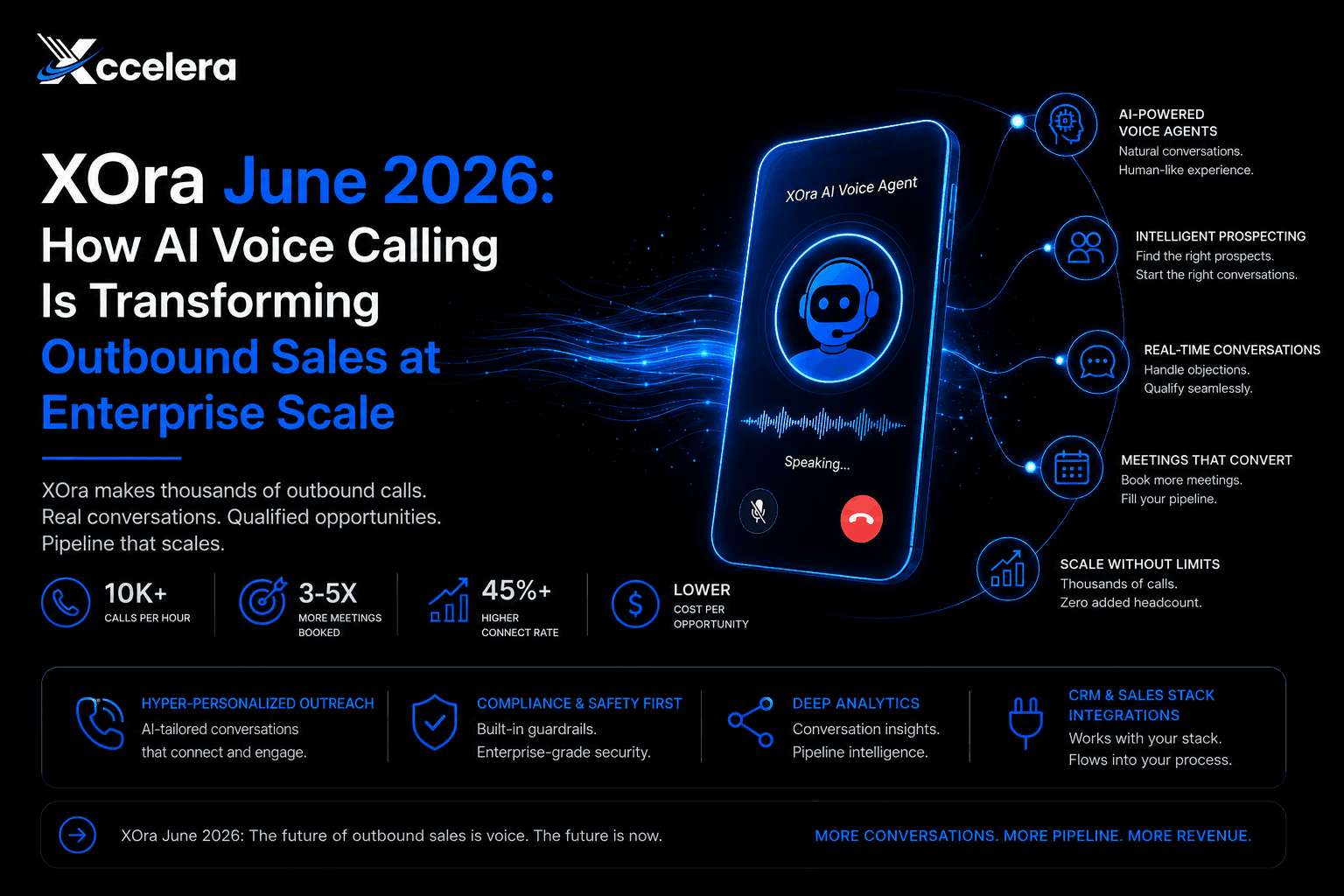
The AI voice agent market crossed $4.8 billion in 2026, growing at a 38% CAGR, and over 65% of enterprise contact centers have deployed or are actively piloting conversational voice AI, according to Forrester Research.
Enterprise-grade voice platforms handle 10,000 or more concurrent calls with sub-second latency.
No onboarding team built from human resources reaches that throughput without a cost structure that makes it economically indefensible at growth stage.
Businesses lose an average of $1.6 million annually from missed calls and slow follow-ups. XOra eliminates that exposure entirely.
Compliance Architecture Built In
XOra’s pipeline is designed for regulated deployment contexts. Every interaction generates an immutable audit trail. The architecture supports SOC 2, HIPAA, and GDPR requirements natively, making it deployable across healthcare, fintech, and enterprise SaaS environments without requiring custom compliance engineering.
Multilingual support extends these capabilities across markets without additional staffing, allowing enterprises operating across regions to deliver consistent onboarding quality regardless of language or time zone.
XOra by Xccelera: Deploying AI Voice Onboarding Across Enterprise Workflows
Xccelera built XOra to solve the onboarding problem at its root. Most teams treat activation as a communication problem and respond with more emails, more tooltips, and more documentation. XOra treats it as an execution problem and solves it with a fully autonomous voice pipeline that operates at the moment of highest user commitment.
What Enterprises Deploy With XOra
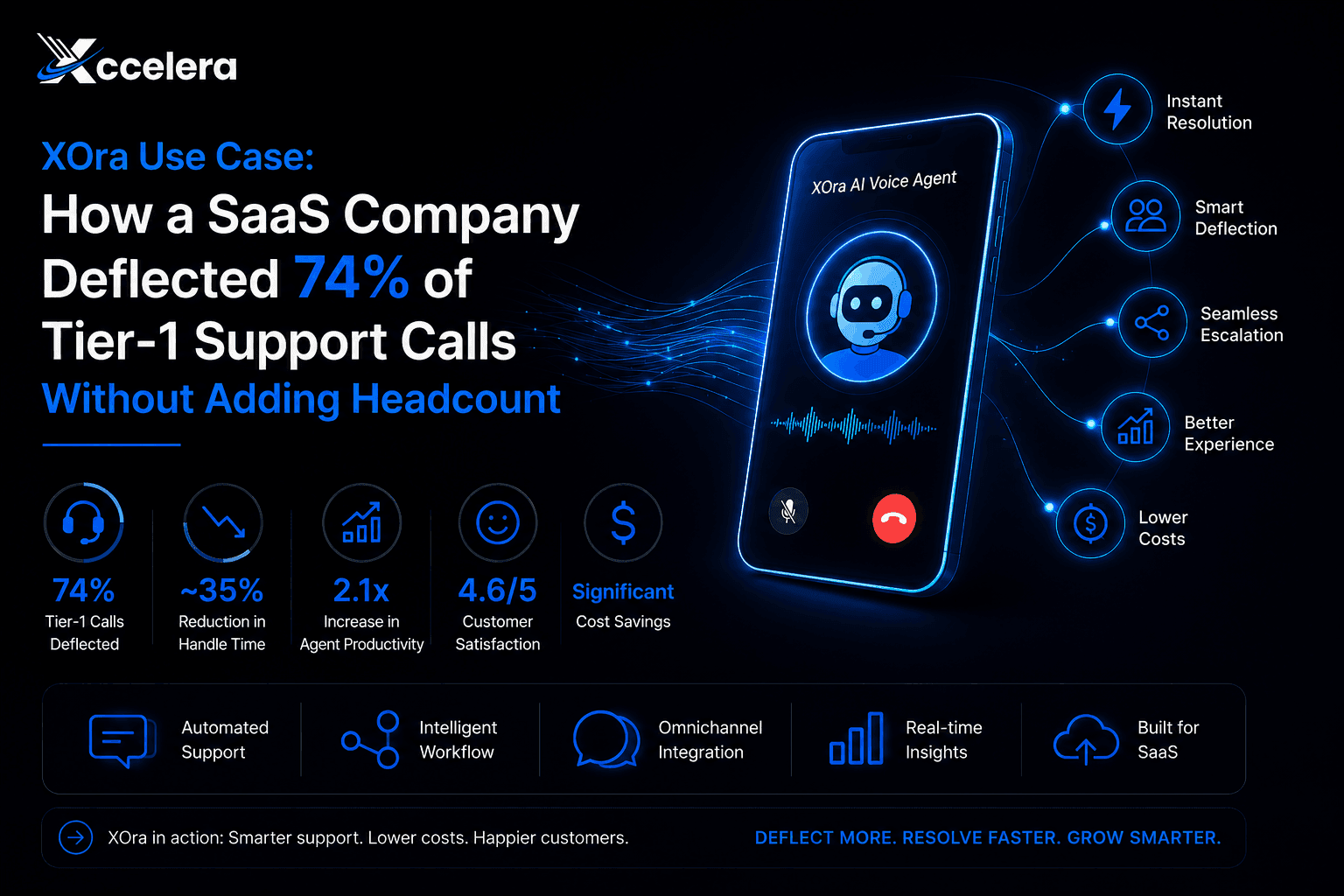
XOra serves Tier-1 support, IT helpdesk, scheduling, sales, and outbound call use cases in addition to onboarding automation. In the onboarding context specifically, it replaces the reactive, asynchronous recovery model with proactive real-time engagement that intercepts drop-off before it happens.
Xccelera deploys XOra within enterprise environments with native CRM integration, compliance-ready architecture, and the memory-driven context layer that makes every subsequent user interaction more informed than the last.
Organizations that deploy XOra for onboarding automation report measurable improvements across activation rate, first-week retention, and support ticket volume reductions from users who would otherwise generate confusion-driven help requests.
The compounding effect of a stronger first 72 hours extends across customer lifetime value, expansion revenue probability, and net promoter outcomes. Xccelera’s deployment model targets production-ready activation in under 3 weeks.